
Generating opportunity for change.
Together we can! Shall we?
♪ We were born to have ♪ perennial impact in the lives of people, participating in the change in the lives of people with street trajectory by providing immediate access to housing and support services.
Adding all the stories, we've delivered more than 20 years of stable housing for those on the street.

A little of our impact...

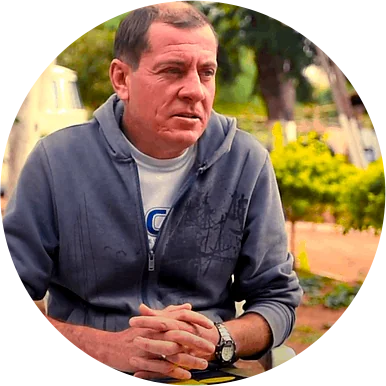
"I need this opportunity.
I want to learn more.
You never know everything.
Where would I like to be?
I want to be here."
This is Luciano changed, renewed.
Luciano Vicente de Souza
Watching Moving

Transparency Reports
Frequently Asked Questions
What are the criteria for admission of persons assisted by the project?
According to the methodology adopted, there is no prioritization based on "ready for housing". This means that more complex cases are not excluded, such as those involving substance use, lack of income or any other factor. The only criteria required are: the person must be on the street or have a street path with high risk of return, and he accepts to participate in the program, understanding the terms of commitment of the project. In addition, there are internal criteria for opening a new case, such as the availability of professionals to follow the case and a reasonable box for its maintenance. In practice, the selection of beneficiaries is guided more by the learning that can be obtained by the Institute by applying the methodology and by the urgency of the situation of the homeless person.
How can people apply/enter the waiting list to be assisted?
In general, assisted people are indicated by public equipment partners of the Institute, which are in constant contact with this population, such as the POP Center, CAPS AD and CREAS. With the increased visibility of the project among homeless people, indications have also emerged through the assistance themselves. Thus, a waiting list is maintained with direct requests for help or received indications. However, the Institute prioritizes the indications from public equipment that are available to collaborate directly with the project, as is the case with CAPS AD, whose professionals act as monitoring agents for one of the people assisted by the program.
How many cases have you seen? How many are in progress? How many were interrupted and why?
Fifteen people have been assisted by the program so far, nine of them still being assisted. Of the other six who have been through the program, one person chose to go to a rehabilitation clinic because of the difficulty of dealing with the harmful use of alcohol living alone. Another returned to the care of his family in another city. The remaining four chose to return to the street situation after the end of their relationships, when they understood that they would not want to live alone in a villa.
How does weekly follow-up work? What criteria do we use to evaluate the development of the case?
The case management process is continuous, we use the following tools as a basis for case monitoring:
- Ecomap: Evaluates the development of the support network.
- Vulnerability framework: It monitors the evolution of risk and protective factors related to housing maintenance.
- Table of Objectives: It assists in the establishment of goals and deadlines for the assistance to achieve what they consider essential to maintain housing.
To learn more about this process, visit our article on the subject: Case Management
Does the program work in cases where substances are used?
Yes, the program deals with cases where there is substance use. In fact, so far, all the people who went through the program have faced issues related to the use of substances. Although particularly complex cases have not yet been attended, especially with regard to mental health, this would not be a criterion to deny the follow-up of a person. It is important to highlight that the program adopts the harm reduction approach, which is fundamental for the application of the methodology. Thus, the work involves helping assisted people understand and implement strategies to reduce the use of substances, as well as promoting responsibility for the consequences of use, rather than focusing on the feeling of guilt caused by relapses and lapses.
What is the harm reduction approach?
Damage reduction is a public health approach that aims to minimize the negative effects associated with the use of substances, without necessarily requiring complete abstinence as a condition to receive support. This approach recognises that, although the use of substances may pose risks, it is possible to reduce these risks and improve the quality of life of people using substances. The principles of harm reduction include:
- Acceptance of Reality: Recognition that substance use is a reality for many people and that complete abstinence may not be immediately attainable.
- Focus on Health and Safety: The emphasis is on reducing the risks associated with the use of substances, such as the prevention of infectious diseases, overdose and other health damage.
- Support and Information: Providing information and resources so that individuals can make more informed decisions about the use of substances and implement safer practices.
- No Judgment: The approach seeks to support individuals in a non-punitive way, promoting an environment where the person feels safe to seek help and guidance.
- Empowerment: It encourages the development of skills and strategies so that individuals can better manage their use of substances and their consequences.
Damage reduction does not replace the search for abstinence for those who want and can reach it, but offers a way to improve quality of life and health for all individuals, regardless of their level of substance consumption.
Is there an estimate of time for the assisted person within the program?
The Housing First methodology does not work with a rigid term logic. In cases that fall under the Rapid ReHousing category, for people in less ‘chronic’ street situations, it is possible to establish a target of approximately 9 months. However, for cases treated under the Housing First approach, it is not possible to accurately predict the duration of care. The Changing Institute, however, has a policy of closing cases, which is applied when it is understood that the assisted is close to achieving their autonomy. At this stage, a gradual exit is implemented, which includes the progressive reduction of financial assistance and the holding of conversations focused on preparing for life without the program.
What is the legal status of the Institute?
The Se Mudando Institute is a private non-profit association, duly registered with CNPJ 55.103.698/0001-62. Its purpose is to promote the reintegration of homeless people into society, dedicated exclusively to support and support activities.
Why does the program need financial support?
The Changing Institute needs financial support to ensure the continuity and effectiveness of its social reintegration activities. Financial support is essential to cover operational costs, including housing expenses, other financial aid and visits. Financial support also contributes to the innovation and expansion of the Institute’s initiatives, enabling a greater number of homeless people to reach and benefit, and thus promoting social transformation and improvement of the living conditions of those assisted. Currently, we depend solely on donations, whether on individuals or on legal entities.
How is the money received by the Institute spent?
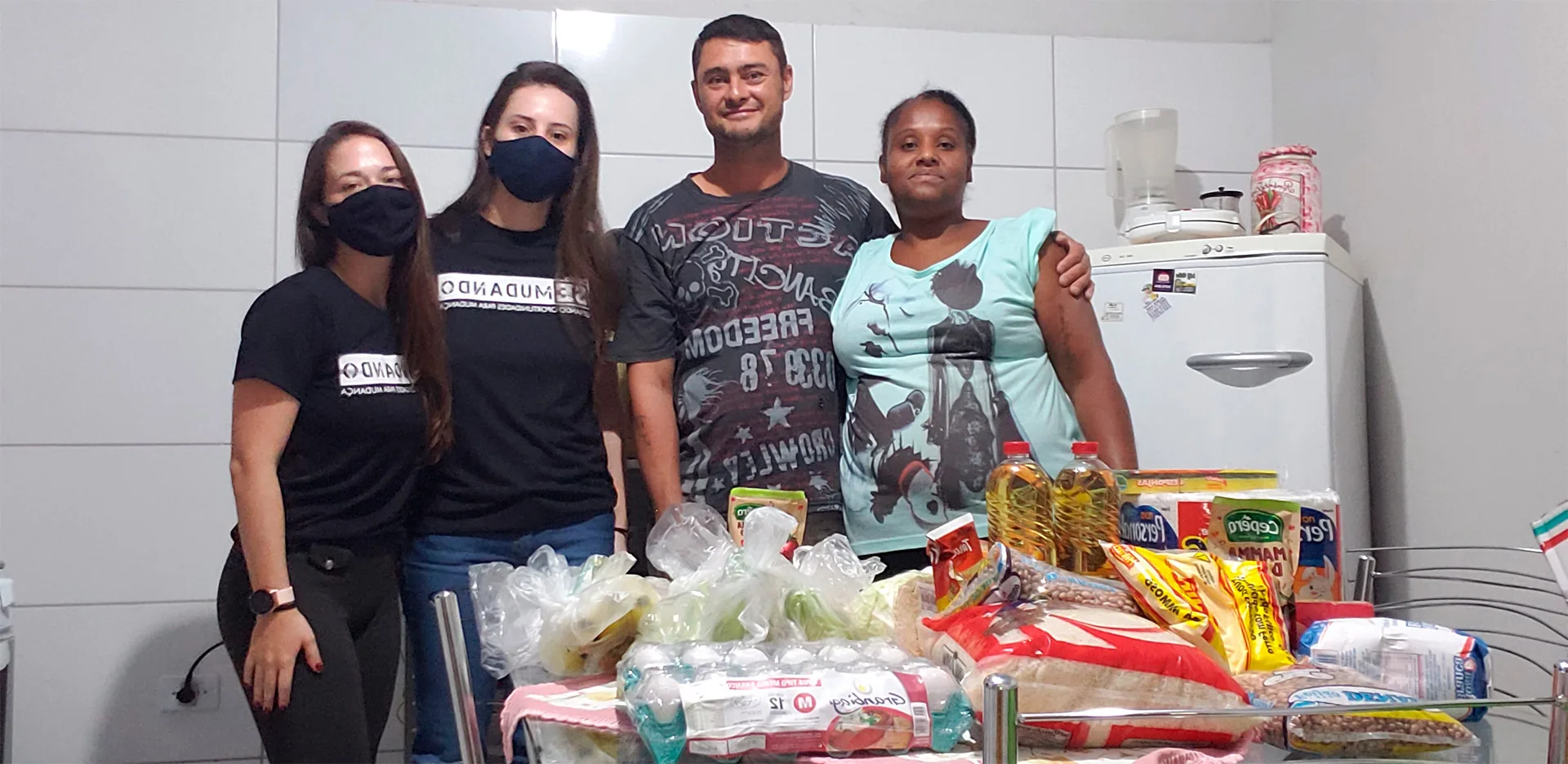
In practice, people who monitor assisted people work voluntarily or work on one of the public equipment with which we partner. We only help financially in the transportation to the home of the assisted person, in which the visit is carried out. In other words, our expenditure per month is mostly in aid to the assisted person. This aid involves an average cost of R$700,00 to R$800.00 rent, a food aid of R$150.00 if CRAS does not offer a basic basket in the month and depending on the assisted person, aid for medications not offered by SUS, totaling average monthly expenditure of about R$1000,00 per assisted person.
How can I donate to the Institute?
You can donate by link: https://donorbox.org/institute-changing
To ensure the continuity of the program, any donation helps us a lot! Especially recurring donations, no matter what the value is. We thank you now for your support and confidence in our work.
How can I become a volunteer at the Moving Institute?
To become a volunteer, whether in our internal areas, or by accompanying an assisted person, just sign up for the Atados platform https://www.atados.com.br/ong/se-changing/vagas or contact us through our social networks https://www.instagram.com/se.mutando?igsh=MjRubHlxZDhhbGhl
After receiving the application, an interview will be scheduled to better understand the profile of the volunteer and discuss their skills and interests. Then, the Moving Institute carries out a training for new volunteers, where information is provided on the Housing First methodology, the Institute's activities, policies and procedures, and the role the volunteer will play in the Institute. The selection process aims to ensure that volunteers are aligned with the mission and values of the Institute and are prepared to contribute effectively. Volunteering is an opportunity to collaborate directly and indirectly with social reintegration initiatives and positively impact the lives of assisted people.