
The Opening Doors programme
We rent a home, hand over the key, and stay alongside the person for as long as it takes. No queue, no abstinence requirement, no deadline to prove they deserve it.

Housing first
Their own home, with a contract, from day one. The Institute covers the rent.

Individualised support
Weekly visits at the start, and a plan built together with the person, at their own pace.

Social integration
Rebuilding family ties, returning to work, and connecting with the city's public services.
What the programme provides in practice
It is not just rent. It is the set of things that holds up someone starting over from nothing.
Rent for a home
An individual home, chosen together with the person, scattered across the city rather than concentrated in one complex. Average cost of R$700.00 to R$800.00 per month.
Food allowance
R$150.00 in months when the local social service does not provide a food parcel.
Medication outside the public system
When someone needs medicine the public health system does not supply, the Institute covers it.
Weekly support visits
A visit at the person's home, with a case worker and a case manager.
Connection to public services
Referral and coordination with the municipal mental health, social care and homelessness services.
Support towards income
Encouragement and follow-up in the search for stable income and in managing household expenses.
Who can take part
There are only two criteria. The person must be experiencing homelessness, or have a street history with a high risk of returning to it. And they must agree to take part, understanding the programme's terms of commitment.
That is all. We exclude no one for using substances, for having no income, or for a situation considered too complex. There is no "housing readiness" assessment: that is the central difference from the traditional model.
In practice, every person who has been through the programme so far has faced issues related to substance use. The programme works with harm reduction, and that is part of the method, not an exception made along the way.
How people reach us
Most referrals come from partner public services that work with this population every day: Centro POP, CAPS AD and CREAS. In some cases professionals from those services continue as case workers alongside our team.
As the programme became better known among people experiencing homelessness in São Carlos, referrals also started coming from the people we already support.
We keep a waiting list. The decision to open a new case depends on two concrete factors: having a professional available to follow the case, and having the cash to sustain the monthly cost for as long as it takes. That is why recurring donations change what we are able to do.
How the support works
Case management is continuous. In the first months visits are weekly, and after that the frequency is agreed with the person. We use three tools to follow how each case develops.
Eco-map
Maps and tracks how the person's support network evolves.
Vulnerability chart
Monitors risk and protective factors tied to keeping the home.
Goals table
Records targets and deadlines set together with the person, based on what they consider essential to keeping the home.
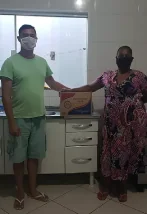
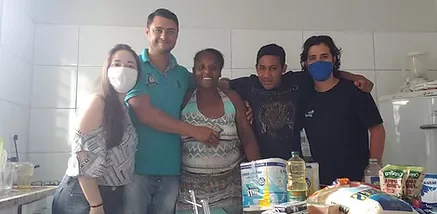
Our first supported family
We have been together since November 2020. They were officially the first people supported by Se Mudando in the Rapid Re-Housing programme.
Since then, our work has gone far beyond making sure the people we support are not left on the street: we help them build the independence and stability to live with dignity.
We provide permanent housing, food parcels, appointments with psychologists and physiotherapists, contact with and encouragement towards a source of income, among many other actions. All of it to give people back their autonomy and security.
The programme's full documentation is public
We have published how we adapt and apply Housing First to the Brazilian context in São Carlos. The aim is to serve as a guide for anyone wanting to implement similar programmes in other cities. We are available to exchange experiences.
Download the documentation (PDF, in Portuguese)Supporting one person costs on average R$1,000.00 per month. That is what stands between someone and a return to the street.